
Dead by Extraction
PIXEL RABBIT LIMITEDRole Playing
4.3452.00 Reviews
- Version
- 1.0.9
- Installs
- 500.00K
- Age Rating
- Everyone 10+
Screenshots
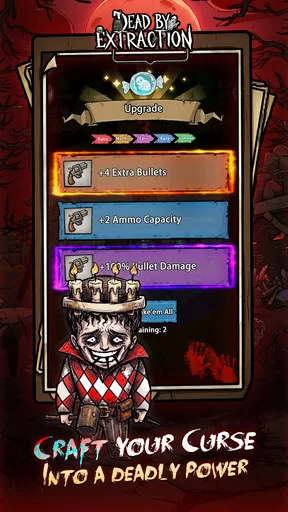
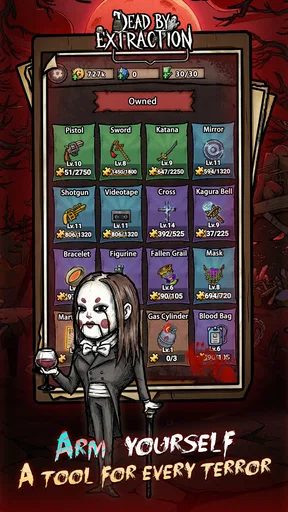
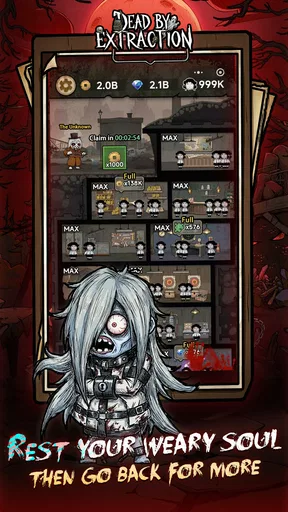
Our Review of Dead by Extraction
 Analysis by Appyee
Dead by Extraction is a role-playing game built around a simple promise: enter a dangerous night, collect what you can, fight when necessary, and try to leave alive. After spending time with it, I found that its most important capability is not merely combat or loot on its own, but the way extraction turns every decision into a risk calculation. The question is constantly changing from “Can I win this fight?” to “Is winning this fight worth delaying my escape?”
That focus gives the game a sharper identity than a straightforward action RPG. I am not just clearing enemies because the next stage requires it. I am deciding whether another room, another container, or another encounter might improve my run enough to justify the danger. When the night is going well, that tension makes even a modest reward feel meaningful. When a run goes badly, the same design can feel demanding rather than relaxing.
Extraction is the capability that shapes every run
The title comes from the central loop: loot, fight, survive, and get out. In practice, extraction changes how I read the environment and how I value time. A reward is only truly useful if I can carry it through the danger and finish the run. That makes retreat an active decision rather than an admission of failure.
This is where the game separates itself from more traditional role-playing games. In a usual dungeon crawler, exploring farther is often the obvious choice because progress is permanent and the next battle is simply part of the route. Here, pushing farther can be the wrong move even when my character still has enough strength to continue. A damaged run, a valuable haul, or an uncertain encounter can all make an early exit the smarter result.
I especially like how this capability gives small choices more weight. Picking up one more item sounds harmless, but that extra stop can expose me to another fight or leave me with fewer options when I finally need to escape. The game therefore rewards awareness and restraint as much as aggression. Players who treat every encounter as something to defeat may get more action, but they will not always get the best outcome.
The idea is easy to understand, which helps the game welcome people who have never played an extraction-focused title. The harder part is accepting that survival may matter more than completion. I had to stop thinking like a player who should always clear the map and start thinking like someone protecting a valuable opportunity.
Why the loop feels different from ordinary loot games
Loot usually works as a direct reward: defeat an enemy, open a chest, improve the character. Dead by Extraction adds a second condition. I need to preserve the run long enough for the reward to matter. That extra condition creates a useful pause before risky decisions, especially when I already have something worth keeping.
This also makes failure feel more complicated than simply losing a battle. Sometimes the mistake happens earlier, when I spend too much health or attention on an optional fight. Sometimes I continue exploring after the run has already become profitable. The most valuable lesson is often not a combat trick, but recognizing the moment when the run has reached its sensible limit.
That is the game’s strongest verified identity in my experience: extraction is not a side activity added to a role-playing framework. It is the lens through which the fighting and looting make sense. Without that pressure, the individual encounters would be much easier to treat as routine.
How a typical session works in practice
I approach each session by setting a mental priority before taking unnecessary risks. If I am testing the game, I may explore more freely to understand how its nights feel. If I already have a useful haul, I become much more selective. This change in attitude is important because the same location can be attractive at the beginning of a run and foolish near the end.
The first stage of a run is usually about gathering information as much as gathering loot. I want to understand which route feels manageable, which encounters are worth engaging, and how much room I have for mistakes. The game becomes more readable once I stop treating every visible reward as mandatory. A quick, modest success can be better preparation for the next attempt than a greedy run that collapses late.
Combat sits inside that larger calculation. I do not see fighting as the only way to demonstrate progress. A battle can secure a reward, open a safer path, or simply consume resources without giving enough back. That trade-off is what makes the combat feel connected to the extraction concept instead of being a separate action layer pasted onto a loot system.
One useful habit is to decide what would make me leave before I become emotionally attached to continuing. For example, I might treat a particularly valuable item or a difficult encounter as the point where I stop looking for more. Without that personal rule, it is easy to keep going because the next reward always appears to be just ahead.
Another practical tip is to treat familiar routes differently from unknown ones. On an early attempt, exploration has educational value, so a failed extraction can still teach me where I overextended. Later, repeating the same kind of route should become more deliberate. If I take the same risks without learning from the result, the loop can feel repetitive rather than strategic.
The rhythm between greed and caution
The most satisfying moments come from changing plans mid-run. I may begin cautiously, find a worthwhile opportunity, and then accept a little more danger because the potential reward justifies it. The reverse is just as important: a promising start can turn into a retreat when the next fight looks too expensive.
This rhythm makes the game more mentally active than its short store summary suggests. I am not only reacting to enemies. I am managing uncertainty, protecting progress, and deciding whether the current run deserves another gamble. That is also why the game may not be ideal for someone who wants a purely relaxing session with predictable forward movement.
Players wondering whether it is suitable for quick play should think in terms of focused sessions rather than background entertainment. The structure is easy to pick up, but the decisions deserve attention. I would not choose it when I want to play without watching what is happening. Its appeal depends on caring about the result of each run.
The best scenario: a short, focused night with a clear goal
The game works best for me when I have enough time to concentrate but not necessarily enough time for a long traditional RPG chapter. A realistic everyday scenario would be an evening break after work: I start a run intending to collect a useful reward, take one or two calculated fights, and leave once the risk begins to outweigh the benefit. That gives the session a beginning, a decision point, and a clear ending.
It is also a good fit for players who enjoy discussing their own mistakes. After a failed attempt, I can usually identify a specific decision that caused trouble: exploring too far, accepting a fight without a good reason, or refusing to leave after finding something worthwhile. That makes failure more constructive than a random loss, even when it is frustrating.
For someone new to extraction games, I recommend learning the value of a successful retreat before chasing ambitious runs. The first goal should not be maximum loot. It should be understanding how the game feels when I leave safely. Once that rhythm becomes comfortable, riskier choices become easier to evaluate because I have a baseline for what a good run looks like.
The best audience is therefore not limited to experienced action players. I think patient RPG fans can enjoy it if they appreciate decision-making and do not need constant character power increases. The game asks for judgment, and its rewards feel better when they come from a well-timed escape rather than from simply surviving every confrontation through force.
When the usual alternatives may be better
If I want a conventional role-playing experience with a strong sense of permanent story progress, a standard campaign-based RPG would probably suit me better. Those games usually let me explore without worrying that one greedy decision will undermine the whole session. Dead by Extraction is more appealing when uncertainty is part of the fun.
It is also not the first choice for someone who wants a pure combat game. A fighting-focused alternative may offer more immediate action because it does not ask me to pause and evaluate the value of leaving. Here, combat is important, but it serves the survival loop rather than replacing it.
On the other hand, players who find ordinary loot systems too predictable may appreciate this structure. The extraction decision gives familiar rewards a different emotional effect. A small gain can feel significant when it is secured under pressure, while a larger potential reward can feel like a trap if I am already stretched too thin.
Trade-offs that become clear after repeated play
The main trade-off is tension versus comfort. Extraction gives the game its personality, but it also means that progress can feel less forgiving than in a typical role-playing title. I sometimes wanted to explore simply because I was curious, yet curiosity had a cost. That friction is intentional, but it will not appeal to everyone.
Another trade-off is simplicity versus long-term variety. The core loop is immediately understandable, which is a strength for accessibility. However, players who need a large number of radically different activities may find the focus narrow. The game’s value depends on whether repeating the loot-fight-survival-extraction cycle remains engaging for you.
Monetization is worth considering before installing. The game is free to play, but it includes in-app purchases ranging from $0.99 to $99.99 per item. I would approach those purchases carefully and decide whether the basic loop is enjoyable before spending anything. The extraction system is only satisfying if the outcome feels earned, so rushing toward paid advantages could weaken the very tension that makes the game interesting.
Device compatibility is relatively broad: it requires Android 7.0 or later. That makes it accessible to people using older supported Android devices, although the experience can still depend on how comfortably a particular phone handles an action-heavy game. I would test the controls and performance during a low-stakes session before committing to longer runs.
The age rating is Everyone 10+, which places it in a space that can work for younger players with appropriate family judgment, but the pressure of losing a run may still be more important than the rating alone. A child who dislikes repeated setbacks may not enjoy it, while a patient player who likes learning through failure could respond well.
What I would change in my own play style
My biggest improvement came from separating “interesting” from “worthwhile.” An unexplored area can be interesting without being worth the danger. A difficult enemy can be exciting without being the right opponent for the current run. This distinction helped me avoid turning every session into an uncontrolled search for one more reward.
I also learned to judge a run by its quality, not just its final haul. A safe extraction with a modest result can teach me more about pacing than a spectacular attempt that ends because I ignored every warning sign. That mindset reduces the temptation to chase a perfect run and makes the game easier to return to after disappointment.
Finally, I would recommend taking breaks after a frustrating loss. Because the game encourages one-more-attempt thinking, it is easy to repeat the same mistake while annoyed. A short pause makes it easier to identify whether the problem was combat, route choice, or simple greed. That is a small habit, but it improves the usefulness of each attempt.
Who gains the most from Dead by Extraction
Dead by Extraction is developed by PIXEL RABBIT LIMITED and sits firmly in the role-playing category, but its strongest audience is more specific: players who enjoy making high-pressure choices around loot. If the idea of leaving with less but surviving sounds satisfying, the game has a clear reason to earn your time.
The public response is encouraging, with a 4.3 average from around 16 thousand ratings and more than 500 thousand installs. Those figures suggest that the premise has found an audience, although popularity alone cannot tell me whether the extraction loop matches my personal taste. I would still judge it by how I feel when deciding whether to stay or escape.
The current version is 1.0.9, and the game was released on February 25, 2026. Those details matter mainly because early versions can feel like a starting point for a developing experience. I would install it with the expectation that the core identity is the important reason to play, rather than assuming it should already replace a much larger RPG.
I would recommend it to a friend who likes compact sessions, calculated risks, and loot that feels valuable because it was successfully carried out. I would hesitate to recommend it to someone who wants a relaxed adventure, a heavily story-led campaign, or combat without the possibility that exploration becomes a bad bargain.
My final opinion is positive but selective. The game’s extraction capability gives its nights a distinct purpose: every fight is also a question about whether I should continue. That is a meaningful design choice, not just a slogan. If you enjoy weighing greed against survival, the loop can keep ordinary rewards surprisingly engaging. If you prefer guaranteed progress and uninterrupted exploration, another role-playing game will likely be a better match. For the right player, though, the smartest victory is often the moment you decide to stop.
Verdict
Strengths of Dead by Extraction
- Fast, tense matches that reward teamwork and quick decision-making.
- Distinct survivor and killer abilities create varied playstyles.
- Strong horror atmosphere with dark maps, sounds, and visual effects.
- Regular events and updates help keep the experience feeling fresh.
- Cross-platform availability makes it easy to play with more friends.
Limitations of Dead by Extraction
- Matches can feel frustrating when teammates ignore objectives or disconnect.
- New players face a steep learning curve and limited beginner guidance.
- Progression may require considerable time to unlock characters and perks.
- Performance can vary on older devices, especially during busy matches.
- Some features and cosmetic items may encourage additional in-app spending.
Similar Picks in This Category
View All
Hair Dye
CrazyLabs LTD4.4

Monster High™ Beauty Salon
CrazyLabs LTD4.5

Bus Simulator - Bus Games 3D
Jima Apps4.4

Flight Pilot: 3D Simulator
Wildlife Studios4.1


Super Stylist Fashion Makeover
CrazyLabs LTD4.4
Frequently Asked Questions
What is Dead by Extraction?
Dead by Extraction is a horror-themed action game centered on escaping dangerous situations while facing relentless enemies. It combines tense exploration, survival-focused gameplay, and fast reactions. Depending on the version available for your device, you may need to complete objectives, avoid detection, collect useful items, and make strategic decisions to survive each encounter. Check the official store listing for the exact features and supported platforms.
Can Dead by Extraction be played offline?
Offline availability may depend on the specific version of Dead by Extraction and how its developers have implemented gameplay features. Some portions may work without an internet connection, while online functions, updates, advertisements, account services, or multiplayer-related content can require access to the internet. Before downloading, review the store description and test the game after installation if offline play is important to you.
Is Dead by Extraction free to download?
Dead by Extraction may be offered as a free download, but the overall experience can vary depending on optional purchases, advertising, or platform-specific payment requirements. Free access does not always mean that every item or feature is included. We recommend checking the current Google Play or App Store listing for pricing, in-app purchases, subscription details, and any restrictions before installing the game.
What devices are compatible with Dead by Extraction?
Compatibility depends on your device model, operating system version, available storage, and the requirements specified by the developer. Horror games with detailed environments can also perform differently on older phones and tablets, especially during crowded scenes or extended sessions. Always check the official store page for the minimum Android or iOS version, download size, permissions, and any recommended hardware information.
Is Dead by Extraction suitable for children?
Dead by Extraction is designed around horror, danger, suspense, and potentially frightening imagery, so it may not be appropriate for younger children or sensitive players. The game may also include violence, intense sound effects, online interactions, advertisements, or optional purchases, depending on the version. Parents should review the official age rating, privacy information, and available parental controls before allowing installation.
Play our best games!


